
|
Safe Job Procedure | Doc ID: SJP-20-11 |
| Rev: 00 | ||
| WALLS, COLUMNS AND SLABS | Date: |
SECTION 1 – GENERAL INFORMATION
| Prepared by: | Phone #: | ||
| Site/Project: | Site Address: | ||
| Prime Contractor/Client: | |||
| Prime Contact (Position & Name): | Phone #: | ||
| On-Site Contact (Position & Name): | Phone #: | ||
| Scope of Work Performed: | |||
| Any additional documents required? | (Hot work permits, Lift plan, Toolbox talk, etc.) | ||
| If YES, please indicate type and reason: | |||
1. Hazard Identification
All workers must wear the basic PPE and specialized PPE as required by site and task
| Task/activity steps | Potential Hazards present | Controls (PPE, Equipment, Training, documents, etc.) |
|---|---|---|
|
|
|
2. Preliminary Activities
Where multiple trade activity is scheduled, the priority of work will be reviewed for all trades by the prime contractor, and the appropriate time frame will be scheduled for each trade to complete their scope of work.
Prior to any work commencing, supervisors must conduct a hazard assessment of all applicable work areas. Any hazards that are found during the hazard assessment must be addressed prior to any work commencing. Record findings in daily hazard assessment form.
General Guideline For Working Safely
- Comply with OH&S Regulations.
- Wear and use the required PPE and ensure that any equipment to be used is in proper working conditions.
- Ensure the general public is protected by closing off / barricading areas which pose a hazard.
- All ladders, equipment and PPE used must be inspected and confirmed safe to use as per manufacturer’s instructions.
- Radio communication must be maintained at all times between rigger and crane operator. Ensure site radios are fully charged prior to starting the task.
- Ensure Engineered drawings for the column, wall and upstand forms are readily available on site.
- Ensure the work area is adequately illuminated, free of unnecessary debris, materials and equipment.
- Workers are not permitted to climb the formwork panels.
- Ladders used for access must be leaning at a 4:1 ratio, on a firm, flat and level base, and secured in place.
- If tying-off ladder is not practical, the ladder can be secured by a fellow worker holding the ladder.
- Supervisor, rigger and crane operator are to monitor weather for any strong winds that could affect the formwork panels when flown and until secured in place.
|
|
Safe Job Procedure | Doc ID: SJP-20-11 |
| Rev: 00 | ||
| WALLS, COLUMNS AND SLABS | Date: |
3. Safe Job Procedures For Erecting Walls, Columns With Crane.
- Read, understand and follow this SWP and all applicable procedures.
- Read, understand and follow manufacturer’ instructions and engineering drawings.
- Before starting, supervisor to ensure all required engineering drawings are available.
- Rigger to hook up the prefabricated columns or walls with the crane. Fly to where it is being erected as per drawings.
- Workers to attach the column or wall to the footings and add rebar ties to ensure its stability.
- Before disconnecting from crane, the chains must slowly release to ensure column maintains upright and weight is properly distributed, once this is completed the rigger may now disconnect crane from column.
- Repeat process for all columns or walls requiring crane.
4. Erecting Manually / By Hand
Stacking materials can be dangerous if employees do not follow safety guidelines. Falling materials and collapsing loads can crush or pin employees, causing injuries or death. To help prevent injuries when stacking materials, employees must do the following:
- Stack materials on flat surface.
- Set area up by removing all debris to assure good housekeeping and stable even surfaces.
- Depending on the materials being stacked, use dunnage when required.
- Ensure that stacks are stable and self-supporting.
- For all materials:
- Band boxed materials or secure them with crossties or shrink plastic fiber.
- Keep all materials away from all edges.
- Stack and block structural steel, bar stock, and other cylindrical materials to prevent spreading or tilting unless they are on racks.
- Use supports or chairs to raise rebar and prevent back injury when lifting.
Columns and Walls
- Read, understand and follow this SWP and all applicable procedures.
- Read, understand and follow manufacturer’ instructions and engineering drawings.
- Before starting, supervisor to ensure all required engineering drawings are available.
- Workers to attach the reinforcement bars to column or wall to the footings and add rebar ties to ensure its stability.
- Repeat process for all columns or walls.
Slabs
- Read, understand and follow this SWP and all applicable procedures.
- Read, understand and follow manufacturer’ instructions and engineering drawings.
- Before starting, supervisor to ensure all required engineering drawings are available.
- Workers to carry the reinforcement bars between two workers and place them on the slab as per engineers drawing and add rebar ties to ensure its stability.
- Repeat process for all sections of slab.
|
|
Safe Job Procedure | Doc ID: SJP-20-11 |
| Rev: 00 | ||
| WALLS, COLUMNS AND SLABS | Date: |
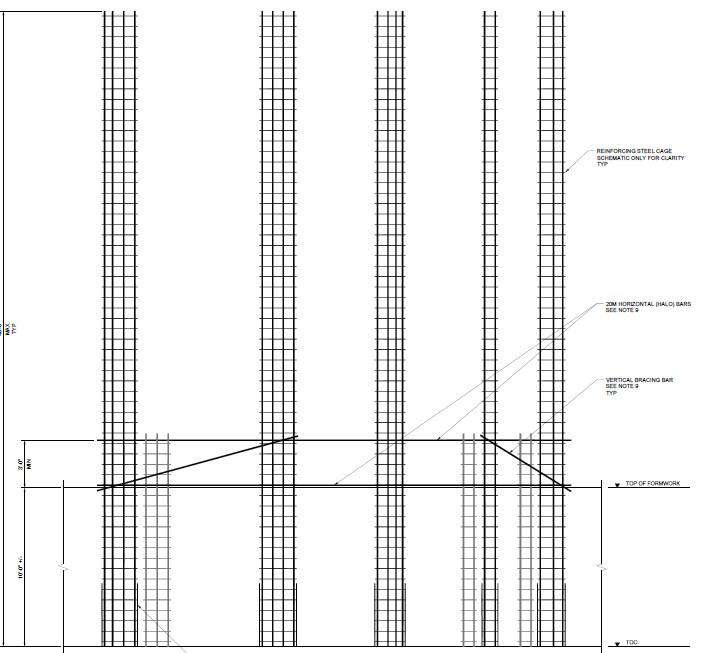
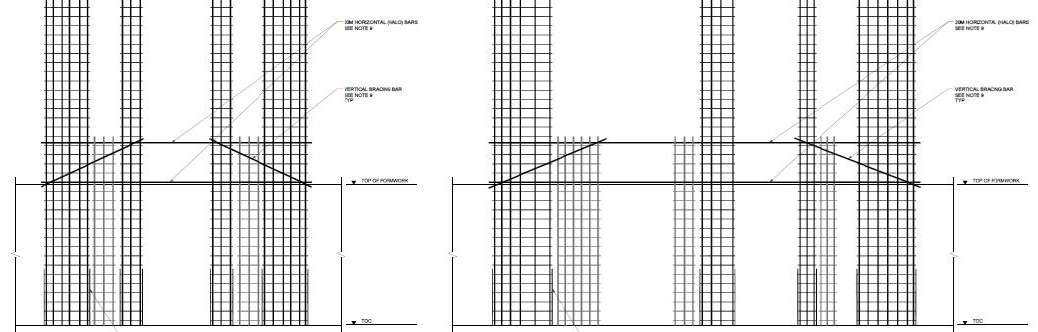
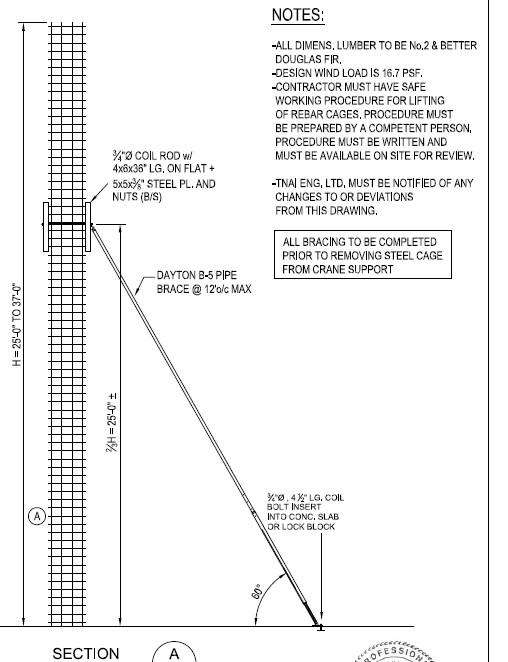
5. Bracing Plans and Engineering Examples
The following are engineering examples of bracing plans for cores and independent columns.
|
|
Safe Job Procedure | Doc ID: SJP-20-11 |
| Rev: 00 | ||
| WALLS, COLUMNS AND SLABS | Date: |
|
|
SJP Acknowledgment | Doc ID: SJP-20-11 |
| Rev: 00 | ||
| Employee Sign-Off Record | Date: |
Employee Declaration: I confirm that I have read, understood, and will strictly comply with the Safe Job Procedure for Walls, Columns and Slabs. I agree to utilize required PPE, actively participate in pre-task meetings, and immediately report any unsafe conditions. I acknowledge that failure to follow this SJP may result in disciplinary action.
| Employee Name (Print) | Signature | Date |
|---|---|---|
| Arshdeep Singh |
|
|
| Badal dhakal |

|
|
| Bandeep Singh |
|
|
| Beerinder |

|
|
| Bhavkaran Singh |

|
|
| paramjeet Singh |

|
|
| Akashdeep Singh |

|
|
| Emmanuel Ackom |
|
|
| Gaganpreet Singh |
|
|
| Gursewak singh |

|
|
| Harjot Singh |

|
|
| Jasspreet Singh |

|
|
| Kamalpreet singh |
|
|
| Karan |
|
|
| Lovepreet Singh |

|
|
| Lovejeet Singh |

|
|
| Manjot Singh |

|
|
| Manwinder Singh |
|
|
| Manveer Singh |
|
|
| Mehakdeep Singh |
|
|
| Navkaran Singh |

|
|
| Paramveer Singh |
|
|
| Sukhmandeep Singh |

|
|
| Sukhraj Singh |

|
|
| Suraj Parkash Singh |

|
|
| Tinderpal Singh |

|
|
| Vijaypal Singh |
|